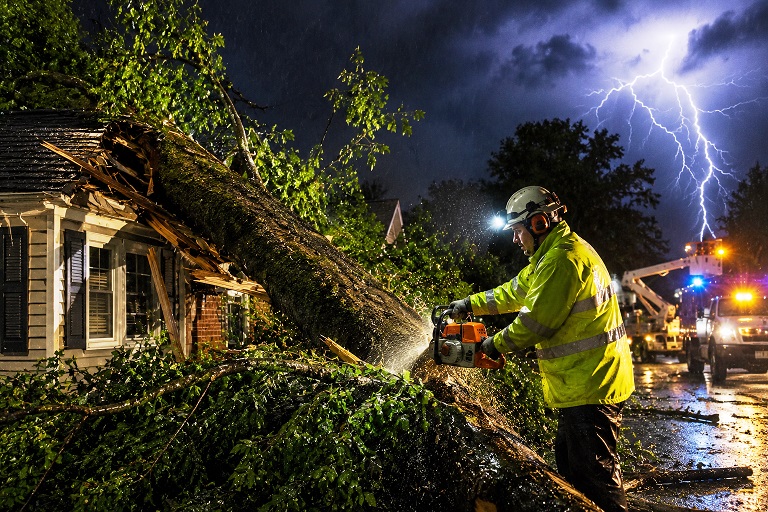
Emergency Tree Service in Mankato MN
For storm damage cleanup, fallen tree removal, broken limbs, hazardous trees, emergency tree cutting, and urgent response for wind, snow, and power outage tree damage.

Storm damage rarely happens at a convenient time. Our crew provides emergency tree service for homeowners and commercial properties dealing with fallen trees, dangerous limbs, blocked access points, and severe weather cleanup throughout the Mankato area. Property owners needing larger removals after storm damage can also get our tree removal service for hazardous or structurally compromised trees.
From overnight windstorms to heavy winter snow damage, emergency response work requires fast decision-making, safe equipment operation, and careful property protection during stressful situations.
Emergency tree situations usually happen fast. A healthy-looking tree can suddenly split during high winds, large limbs can collapse under heavy snow accumulation, or saturated soil can cause mature trees to lean unexpectedly toward homes, garages, and driveways.
In many cases, property owners are left dealing with blocked vehicles, damaged fences, roof impact concerns, or trees tangled near utility infrastructure before they even know where to start.
Safe removal of trees blocking driveways, sidewalks, garages, and access points after severe weather events.
Broken branches and hanging limbs are removed carefully to reduce immediate safety risks around structures and walkways.
Debris removal, damaged branch cleanup, and emergency site stabilization after windstorms and snow damage.
Controlled cutting and dismantling for unstable trees threatening homes, vehicles, fences, or utility areas.
Some emergencies require immediate removal, while others involve stabilizing partially damaged trees until conditions are safe enough for larger equipment and controlled dismantling procedures.
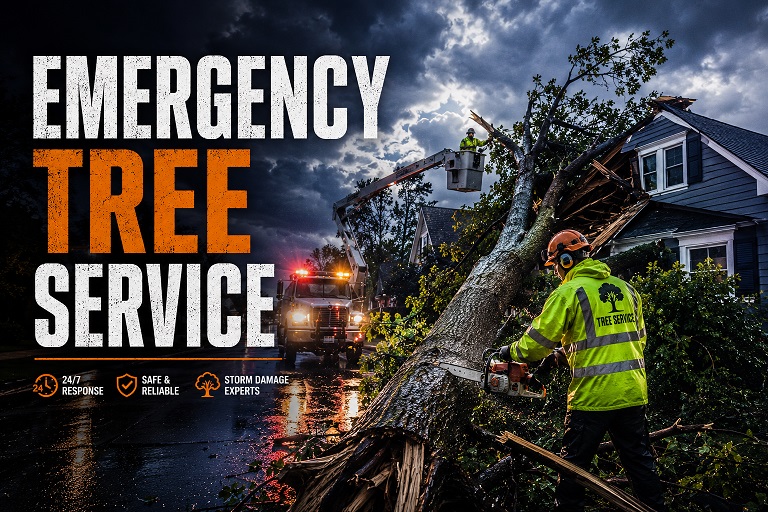
Storm damage often exposes structural weaknesses property owners never realized were there. Trees weakened by age, disease, insect activity, or previous storm stress can fail suddenly when additional pressure builds during severe weather.
During spring and summer storm season in southern Minnesota, fast-moving thunderstorms can leave behind dangerous debris fields within minutes. Winter conditions create different problems, especially when heavy snow accumulation and ice buildup place additional stress on aging limbs.
Many emergency calls happen late at night or early in the morning after severe weather moves through the area. The first priority is usually making the property safe enough for homeowners, vehicles, and emergency access.
Emergency tree situations create unpredictable hazards. Damaged limbs can shift suddenly under tension, partially uprooted trees may continue moving after impact, and compromised trunks often behave differently than healthy wood during cutting operations.
Many of the most dangerous situations involve utility line hazards, unstable leaning trees, or large limbs suspended above structures after severe weather.
Professional crews evaluate tree tension, structural stress, fall zones, and surrounding hazards before any cutting begins.
Bucket trucks, rigging systems, chainsaws, and specialized cutting equipment help manage unstable trees more safely.
Controlled removal methods help reduce additional damage to roofing, fencing, landscaping, and surrounding structures.
Detailed documentation and cleanup coordination can help property owners navigate storm-related insurance situations more efficiently.
Storm response work is very different from routine tree maintenance. Trees damaged by severe weather often contain hidden pressure points and unstable sections that require experienced handling to avoid secondary accidents.
The property is evaluated for immediate hazards, unstable trees, structural risks, and emergency access concerns.
Dangerous limbs, fallen trees, and unstable sections are removed carefully using controlled cutting procedures.
Debris, damaged branches, and leftover material are cleared to improve safety and restore property access.
Emergency tree situations create unpredictable hazards. Damaged limbs can shift suddenly under tension, partially uprooted trees may continue moving after impact, and compromised trunks often behave differently than healthy wood during cutting operations.
Many of the most dangerous situations involve utility line hazards, unstable leaning trees, or large limbs suspended above structures after severe weather.
Professional crews evaluate tree tension, structural stress, fall zones, and surrounding hazards before any cutting begins.
Bucket trucks, rigging systems, chainsaws, and specialized cutting equipment help manage unstable trees more safely.
Controlled removal methods help reduce additional damage to roofing, fencing, landscaping, and surrounding structures.
Detailed documentation and cleanup coordination can help property owners navigate storm-related insurance situations more efficiently.
Storm response work is very different from routine tree maintenance. Trees damaged by severe weather often contain hidden pressure points and unstable sections that require experienced handling to avoid secondary accidents.
Emergency tree situations create unpredictable hazards. Damaged limbs can shift suddenly under tension, partially uprooted trees may continue moving after impact, and compromised trunks often behave differently than healthy wood during cutting operations.
Many of the most dangerous situations involve utility line hazards, unstable leaning trees, or large limbs suspended above structures after severe weather.
Professional crews evaluate tree tension, structural stress, fall zones, and surrounding hazards before any cutting begins.
Bucket trucks, rigging systems, chainsaws, and specialized cutting equipment help manage unstable trees more safely.
Controlled removal methods help reduce additional damage to roofing, fencing, landscaping, and surrounding structures.
Detailed documentation and cleanup coordination can help property owners navigate storm-related insurance situations more efficiently.
Storm response work is very different from routine tree maintenance. Trees damaged by severe weather often contain hidden pressure points and unstable sections that require experienced handling to avoid secondary accidents.
Professional grinding machines allow deeper and more efficient removal than smaller rental equipment.
Projects are completed with proper safety procedures and careful property protection standards.
Property owners receive straightforward estimates, scheduling updates, and realistic project timelines.
Debris removal and cleanup help leave the area clean, level, and easier to restore afterward.
Emergency projects are handled using professional safety standards and insured operational procedures.
Storm situations are prioritized quickly to help reduce additional property risks and access issues.
Commercial-grade equipment allows safer handling of unstable trees and debris in difficult conditions.
Property owners receive realistic timelines, practical updates, and straightforward guidance throughout the cleanup process.
Storm damage can create serious safety concerns within minutes, especially when unstable limbs or fallen trees threaten structures, vehicles, and utility areas.
Our team helps homeowners and commercial property owners throughout Mankato respond quickly with professional cleanup, safe removal procedures, and practical emergency support during severe weather situations.